European clothing brands and sourcing agents face stricter expectations on product safety, labeling accuracy, supply-chain due diligence, and sustainability claims. If you are evaluating a garment manufacturer in Bangladesh for EU or UK programs, compliance work starts before the first bulk order — during factory selection, tech pack review, and sampling.
Labeling and Fibre Content (EU Market)
EU-bound apparel must present fibre composition, care instructions, and importer or manufacturer identification in line with your destination market rules. Confirm how your factory handles main labels, size tabs, care labels, and language requirements for multi-country distribution. Ytex coordinates label execution with buyer artwork as part of private label and export programs — share your label matrix early in sampling.
- Fibre names and percentages match approved tech packs and lab tests
- Care symbols align with fabric finish and wash development
- Country-of-origin marking matches production location and your import documentation
- Hangtags and packaging meet retailer-specific restrictions (materials, adhesives, language)
Chemicals, REACH, and Restricted Substances
REACH and related EU chemical frameworks affect textiles, trims, prints, and packaging. Buyers typically maintain restricted substance lists (RSL) and expect suppliers to control dyes, auxiliaries, and subcontracted finishing. Ask factories how they manage chemical inventories, test reports, and subcontractor oversight for wash and print — especially on denim and garment-dyed programs.
Social Compliance and Due Diligence
Corporate due diligence laws in several EU member states require brands to identify and mitigate human-rights and environmental risks in supply chains. Even when production is offshore, buyers document factory audits, corrective action plans, and wage-hour transparency. When visiting or virtually auditing a Bangladesh export factory, review fire safety, worker contracts, overtime records, and grievance mechanisms alongside production capacity.
Sustainability Claims: OEKO-TEX, GOTS, and Buyer Programs
Retailers often reference OEKO-TEX, GOTS, recycled content standards, or their own sustainability scorecards. Treat certificates as order-specific: verify scope (which facility, which product line), validity dates, and whether your styles use certified materials. Do not assume a factory-wide certificate covers every fabric or wash without written confirmation from merchandising.
Quality, AQL, and Pre-Shipment Control
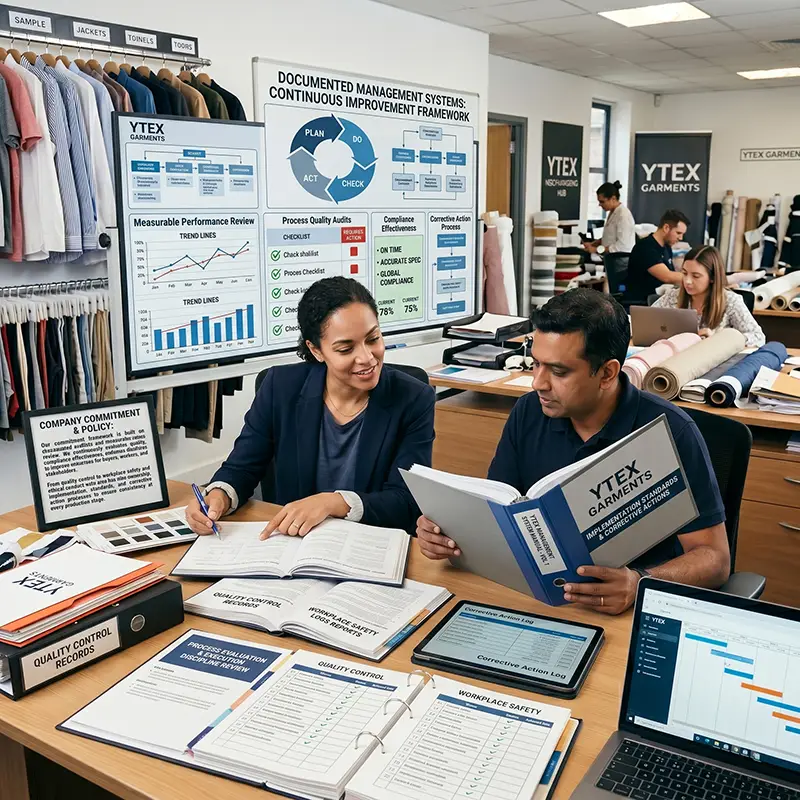
Compliance includes consistent construction quality. Define AQL levels, defect classifications, and who performs final inspection before shipment. Export factories in Dhaka should offer inline QC, measurement checks against graded specs, and documented rework limits. Align inspection timing with your logistics cut-offs for EU distribution centres.
Checklist Before You Approve Bulk
- Signed tech pack, bill of materials, and approved PPS
- Label and packaging sign-off for each SKU
- Test plan for fibres, colourfastness, and any buyer-mandated RSL screens
- Audit or compliance documentation current for your program
- Incoterms, payment terms, and ex-factory date agreed in writing
Work With Ytex Garments on EU Programs
Ytex Garments Ltd. is a 100% export-oriented manufacturer in Dhaka, supporting woven, denim, and private label programs since 2016. Share your EU or UK compliance brief with our merchandising team — we will confirm sampling steps, labeling support, and production feasibility. Start at ytexgmts.com/garment-manufacturer-european-brands-bangladesh or contact md@ytexgmts.com.