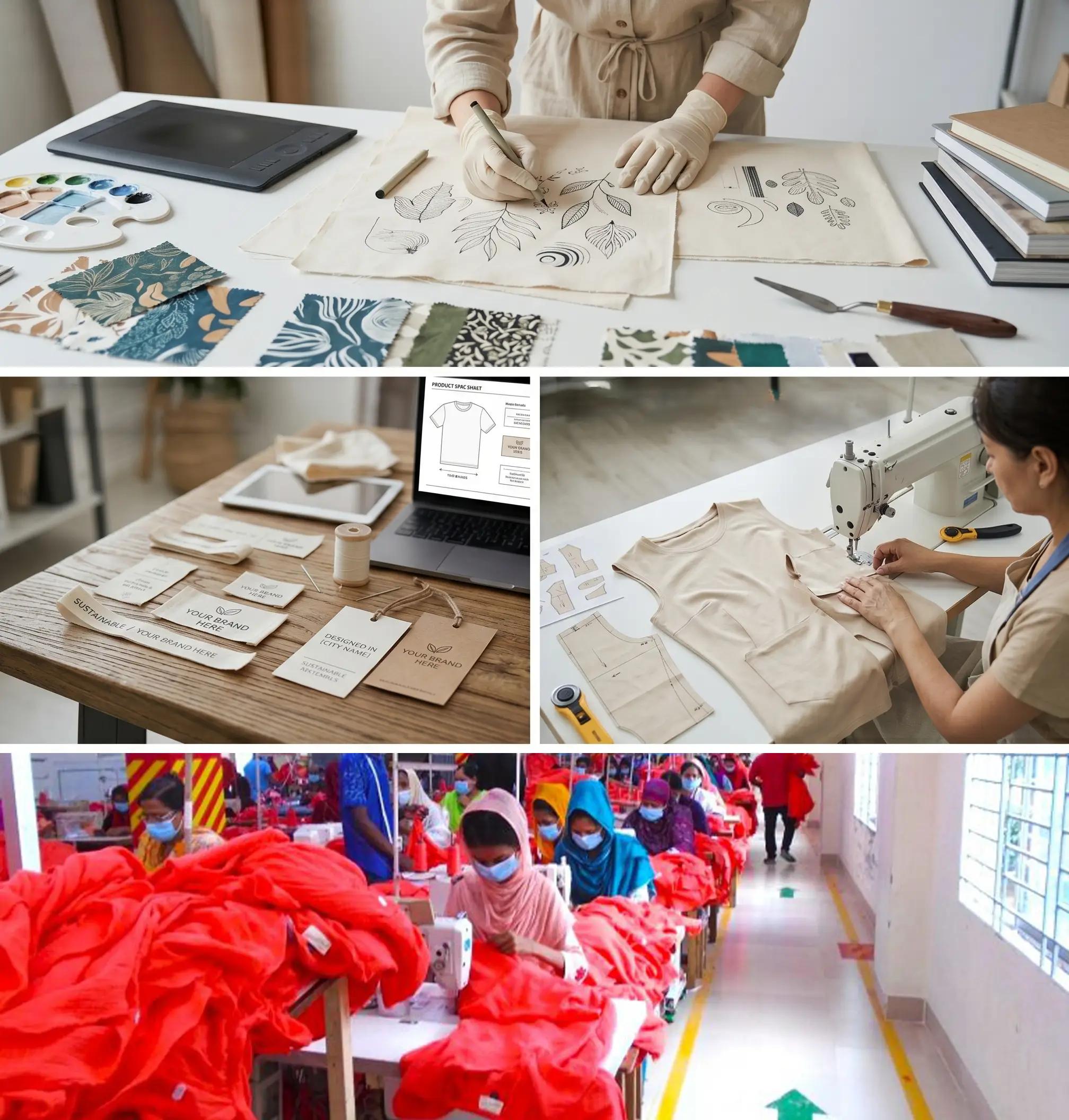
Sustainability has moved from boardroom rhetoric to purchase order reality. Retailers, brands, and sourcing agents now evaluate garment suppliers on environmental impact, worker welfare, chemical management, and transparent supply chain practices. For buyers sourcing from Bangladesh, sustainable garment production is not about finding a single "green factory" — it is about identifying manufacturers with integrated systems that protect people, process, and product across every order.
What Sustainable Garment Production Really Means
Sustainable garment production covers multiple dimensions: safe and fair working conditions, responsible resource use, reduced chemical and water impact in dyeing and washing, waste reduction on the factory floor, and ethical conduct throughout the supply chain. For export manufacturers in Bangladesh, sustainability also means meeting international buyer audit standards and documenting compliance with increasing consistency.
Buyers should avoid treating sustainability as a label claim alone. The strongest suppliers demonstrate operational practices — energy-efficient equipment, effluent treatment, restricted substance controls, worker training, gender equality policies, and community engagement — supported by management systems that survive audit scrutiny and repeat buyer visits.
Why Bangladesh Is Central to Sustainable Apparel Sourcing
Bangladesh produces billions of garments annually for global markets. That scale means improvements in sustainability practices here have outsized impact worldwide. The industry has invested heavily in factory safety, compliance culture, and environmental awareness following years of buyer and institutional pressure. Leading Bangladesh manufacturers now compete not only on price and speed — but on responsible production credibility.
- Industry-wide focus on building safety and compliance systems
- Growing adoption of effluent treatment and water conservation in washing/dyeing
- Buyer-driven chemical management and restricted substance protocols
- Worker welfare programs including health, training, and community support
- Alignment with SDG and retailer sustainability scorecard requirements
Environmental Responsibility in Dyeing and Finishing
Dyeing, washing, and finishing are among the highest-impact stages in garment production. Sustainable garment manufacturers invest in low-impact dye processes, responsible wash chemistry, water recycling where feasible, and shade development workflows that minimize rework waste. Eco-friendly dyeing is not a single technology — it is a management commitment to reduce environmental load while maintaining colour quality and fastness buyers expect.
When evaluating a Bangladesh factory's environmental practices, ask about wash recipe control, chemical storage, wastewater treatment, and how shade approvals are managed to avoid bulk rejection. Factories with strong finishing discipline typically show cleaner production areas, documented chemical logs, and merchandising teams that understand buyer sustainability questionnaires.
Social Compliance and Worker Welfare
Sustainable production starts with people. Export garment factories in Bangladesh must maintain safe working environments, fair wage structures, documented working hours, and grievance mechanisms that protect workers. Buyers increasingly review occupational health and safety systems, fire safety preparedness, and whether factories support worker dignity beyond minimum compliance.
Manufacturers committed to sustainability often extend beyond the factory floor — supporting education for workers' children, health awareness programs, and community initiatives that strengthen long-term workforce stability. These programs signal management culture, not just audit performance.
How Buyers Can Verify Sustainability Claims
Before placing bulk orders, buyers should verify sustainability through evidence — not presentations alone. Request factory profile documentation, compliance certificates where applicable, sustainability policy summaries, and clear answers on dyeing, waste management, and worker welfare programs. If possible, conduct factory visits or third-party audits aligned with your retailer standards.
- Review code of conduct, quality, and sustainability policies
- Confirm chemical management and restricted substance procedures
- Assess sample development efficiency to reduce material waste
- Evaluate merchandising transparency and production traceability
- Match factory capabilities to your retailer's sustainability scorecard
Ytex Garments Sustainability 5.0 Approach
Ytex Garments Ltd. structures sustainability across five pillars: People, Process, Product, Community, and Environment. From our export facility in Dhaka, we integrate worker welfare, Japanese 5S quality management, responsible production practices, community engagement, and environmental awareness into daily operations — supporting buyer programs that demand ethical and sustainable garment production in Bangladesh.
Our eco-friendly dyeing and finishing coordination, Production LAB sample discipline, and merchandising transparency help buyers reduce waste and protect quality before bulk commitment. If sustainable garment production is a sourcing priority, partner with a manufacturer that treats responsibility as operational infrastructure — not seasonal marketing language.