People
Our people are our greatest asset. We invest in their health, safety, skills, and dignity — creating a workplace where every worker is valued.
- Worker health & safety
- Gender equality
- Skills training
- Fair wages & benefits
- Grievance mechanisms
At Ytex Garments Ltd., sustainability is not a policy document — it is the way we operate every single day, across every department, for every order we produce.
"Sustainability is the ability to survive and grow — to build a business that serves today's buyers without compromising the workers, communities, and environment that future generations depend on."
Ytex Garments Ltd. operates as an ethical garment manufacturer in Bangladesh — combining sustainable production discipline with fair workplace practices, transparent merchandising, and buyer-aligned compliance. Sustainability is embedded into our business, not treated as a checkbox: our Sustainability 5.0 Strategy organises this commitment into five interconnected pillars — People, Process, Product, Community, and Environment.
We recognise that the garment industry carries significant social and environmental responsibilities. Bangladesh is one of the world's largest garment exporters, and as a BGMEA-member manufacturer, Ytex Garments takes its role in shaping a more ethical, transparent, and environmentally conscious industry very seriously.
From fair wages and gender equity on our production floor to water conservation, energy efficiency, and responsible chemical management in our processes — every aspect of how we run our factory reflects our sustainability values. We report on progress, set measurable targets, and hold ourselves accountable to continuous improvement.
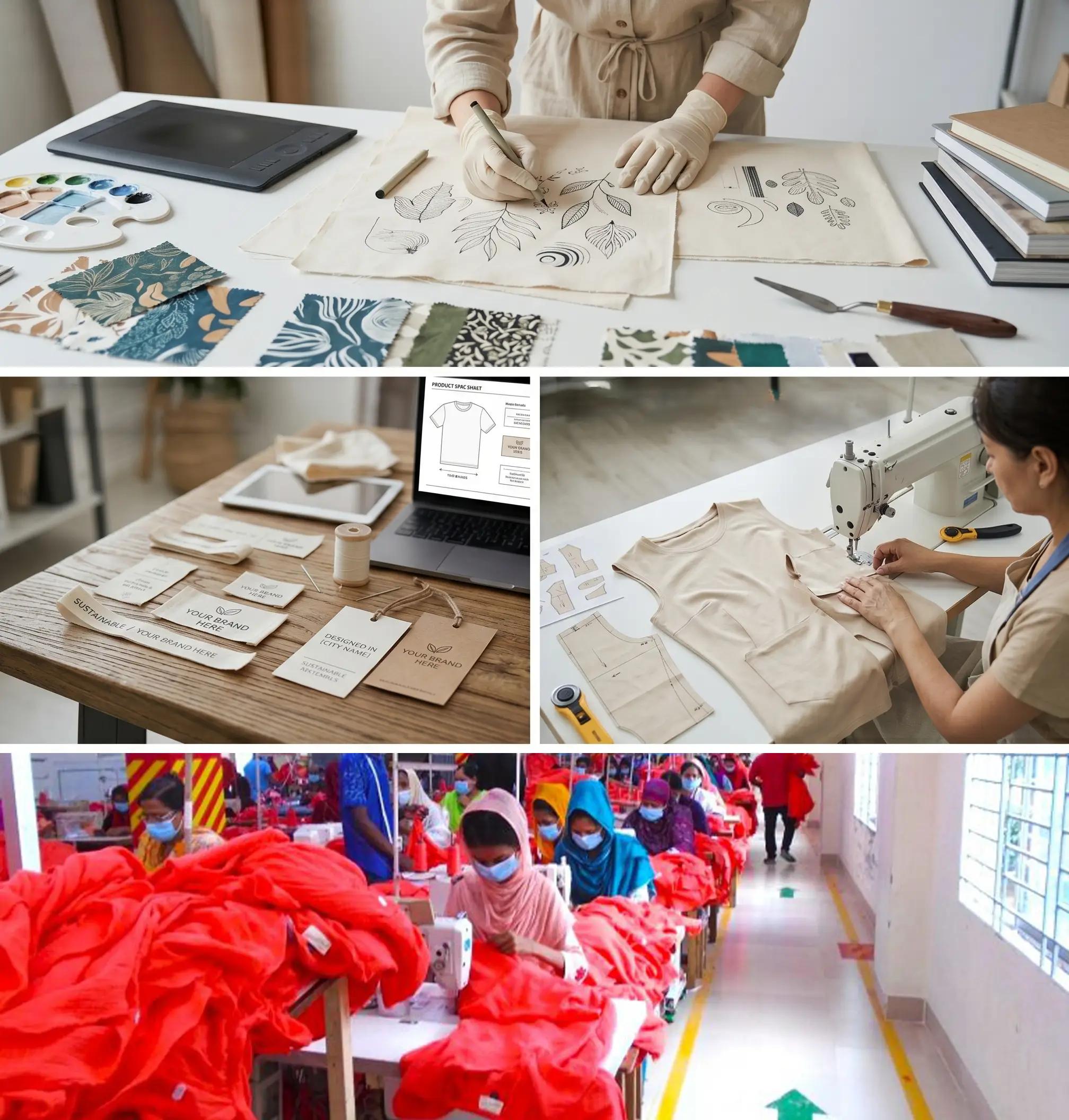
Five interconnected pillars guide every sustainability decision we make — from how we treat our workers to how we manage our environmental footprint.
Our people are our greatest asset. We invest in their health, safety, skills, and dignity — creating a workplace where every worker is valued.
We continuously improve our production processes to reduce waste, increase efficiency, and eliminate harmful practices from our supply chain.
We develop and produce garments that meet the highest standards of ethical sourcing, material transparency, and product responsibility.
We are part of the community we operate in. We invest in local development, support worker families, and contribute to a more equitable society.
We take active steps to reduce our environmental impact — cutting energy use, conserving water, managing chemicals responsibly, and reducing carbon emissions.
Ytex Garments Ltd. aligns its sustainability strategy with the United Nations Sustainable Development Goals (SDGs) — the global framework for building a more equitable, prosperous, and sustainable world by 2030. As a garment manufacturer operating in one of the world's most important textile export nations, we recognise our direct connection to multiple SDGs and our responsibility to contribute meaningfully to their achievement.
The ten SDGs highlighted here reflect the areas where our business operations, workforce practices, and environmental management have the most direct impact — and where we have made specific, measurable commitments to progress.
10 of 17 UN SDGs directly addressed by Ytex Garments Ltd.
Active programmes running across our social and environmental commitments — tangible actions, not just ambitions.

Specific, measurable commitments that guide how we operate — and that our buyers can hold us accountable to.
All workers receive wages at or above the Bangladesh minimum wage standard, paid on time every month without deduction or delay.
Full fire safety equipment, clearly marked emergency exits, regular fire drills, and trained safety officers across all floors of our factory.
75% of our workforce are women. We actively support women in leadership roles through our Female Supervisor Development Programme.
Active reduction of water consumption per unit produced through process optimisation, recycling systems, and waterless finishing technologies.
Ongoing LED lighting upgrades, energy-monitoring systems, and a roadmap toward renewable energy integration across our production facility.
We are committed to the ZDHC framework — eliminating hazardous chemicals from our production processes and supply chain by 2027.
Fabric offcuts, packaging waste, and production byproducts are sorted, minimised, and directed to recycling and responsible disposal channels.
We report on our sustainability performance to buyers on request — covering worker welfare, environmental impact, and programme progress.
All fabric mills, trim suppliers, and subcontractors are vetted for compliance with our ethical sourcing standards before being approved for use.
Sustainability is increasingly a buyer requirement, not just a preference. If you are looking for a garment manufacturer in Bangladesh that can demonstrate genuine ethical and environmental credentials, we would love to hear from you.
Sustainable production ties into eco-friendly dyeing, garment manufacturing, and international export compliance.